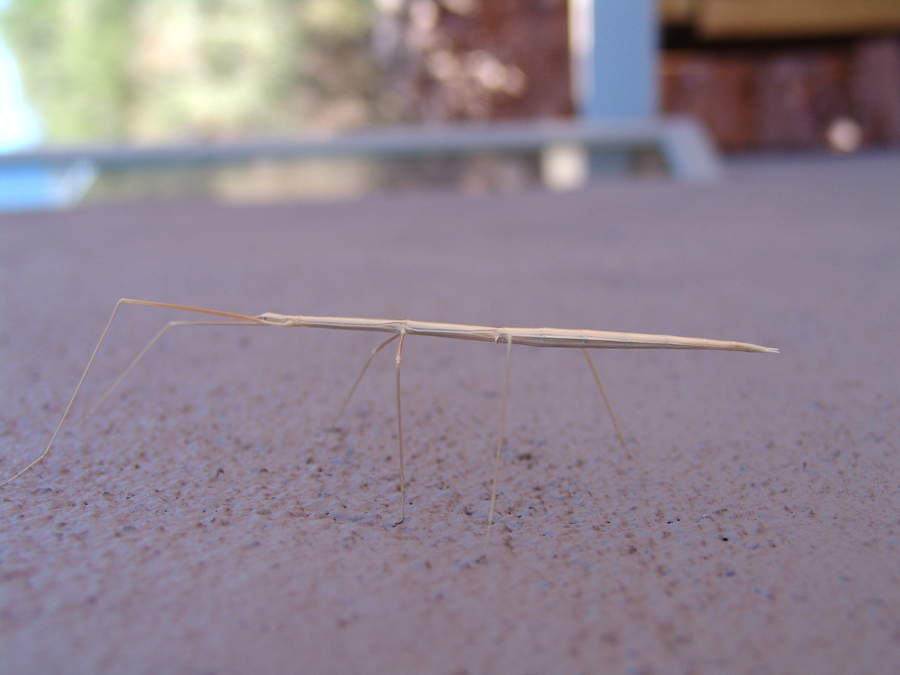
Walking Sticks (Family Phasmatidae)
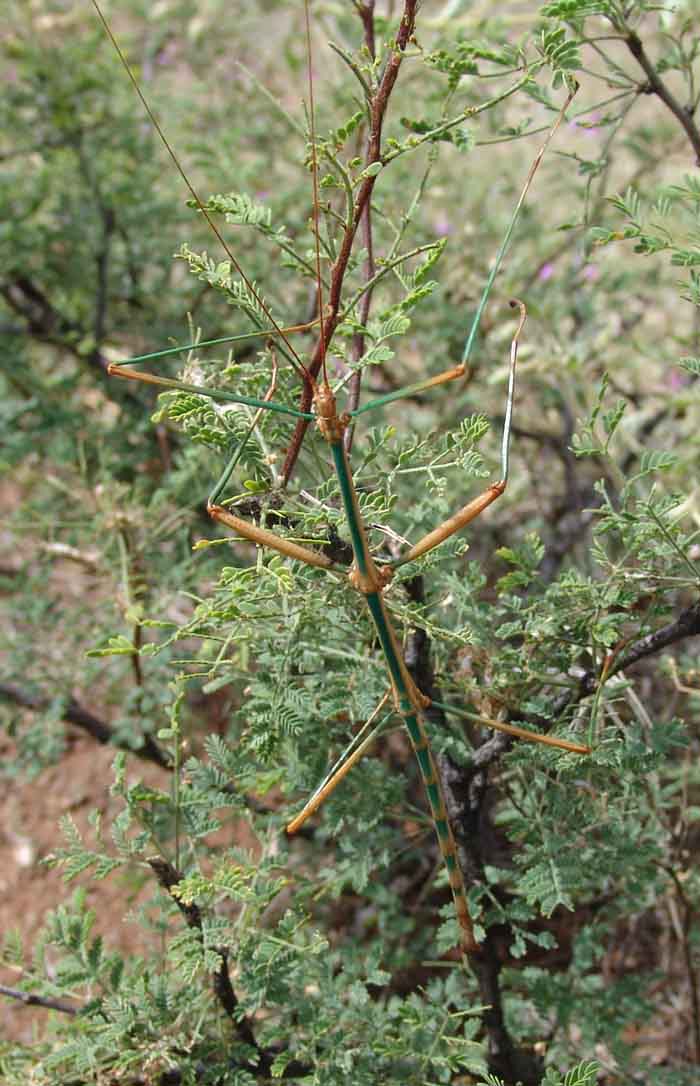 So-called "Leaf" and "Stick" insects are classed either as a suborder of the Orthoptera (the "straight-winged" insects -- referring to the parallel-sided structure of the front wings, including grasshoppers, crickets, mantids, cockroaches et al.) or, perhaps more likely, a sister group -- in any case one characterized by an elongated, slender, usually cylindrical body structure. All of these creatures are herbivores, and the term "Phasmatid" refers to the usually cryptic body colors these creatures possess which (along with their bodily forms) make them resemble the vegetation on which they live ("phasma" means "phantom"). At left, we think this is a Diapheromera femorata (popular name "Common Walkingstick"), photographed near the Cow Camp in September 2006, attached to a Fairy Duster plant. (click on the image to enlarge it.) Note especially the alternating green and wheat-colored leg and body sections of this specimen, which make the animal hard to see when it is grasping a green-leafed plant. Walking Sticks are mainly active at night, and usually cling almost motionless to sticks and branches during the day.
Walking Sticks tend to be large (the largest existing terrestrial arthropod is one of these species, having a documented specimen nearly two feet long), and their long legs have large lateral extensions adapted for walking. Mostly they are slow-moving insects, with reduced wings (functional only in males or lacking entirely). This one, a male, was not very large, but about 4 inches long not counting the very long antennae.
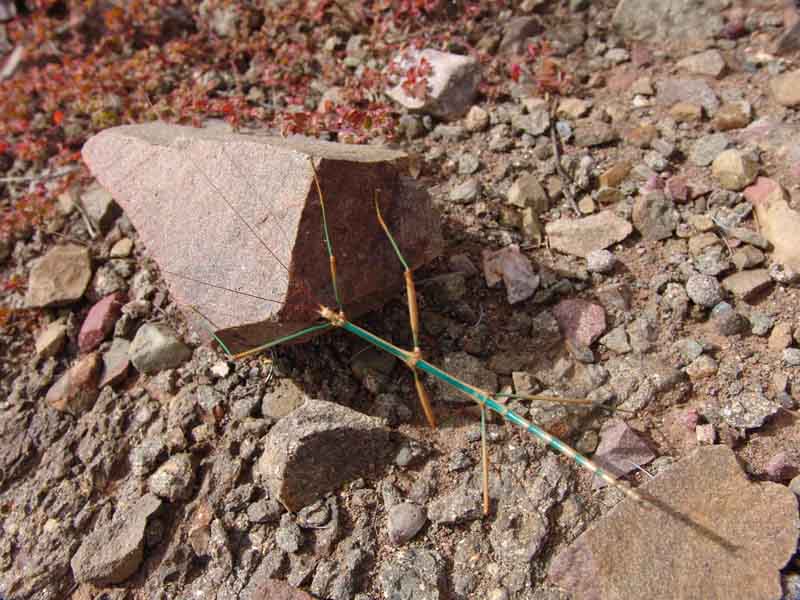
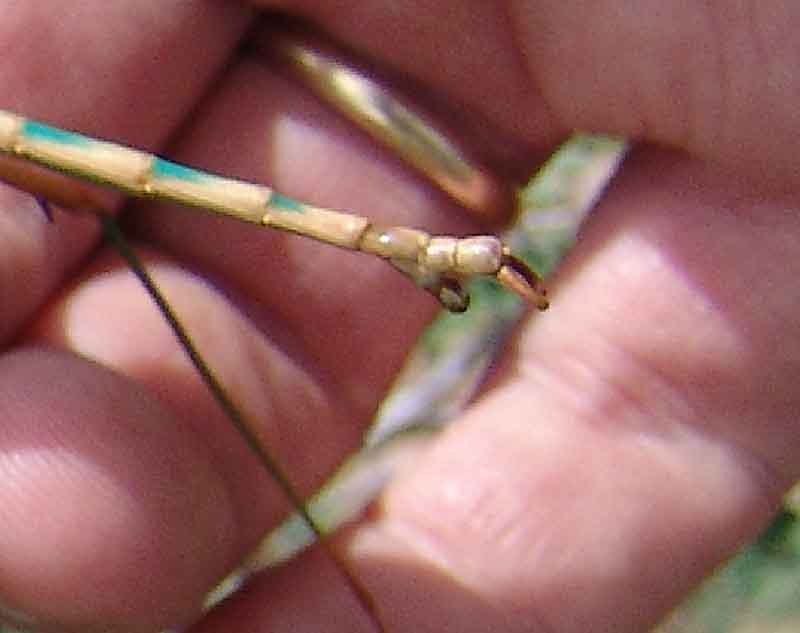
Below, the same specimen now escaping on the open ground, where Walking Sticks demonstrate they can move fairly fast if they want to. At left you see the characteristic distribution of the antennae and the jointed legs, which are spread out over a large space, giving them strong grasp of their environment. At right, this one is a male since he possesses the characteristic terminal claspers, which are used to grasp the female's abdomen during mating. (Click on each image for enlargement.) (The right-hand enlargement provides a better focus on the claspers from a different angle.)
 ..
..
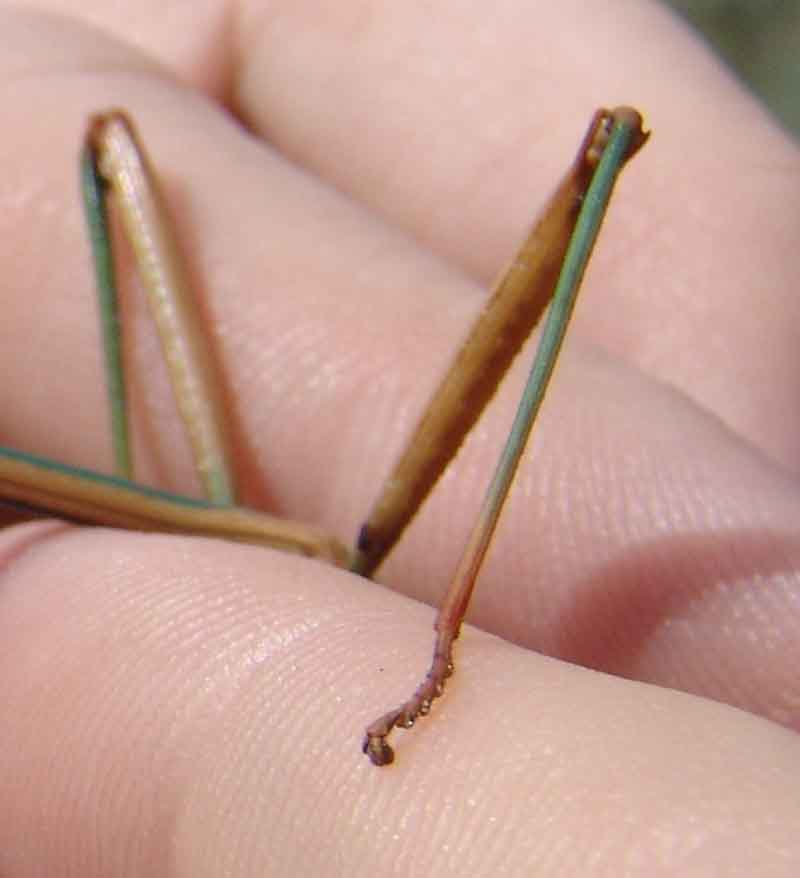
In the banner image at the top of this page, you can see this same Walking Stick moving through its terrain with firm command of its structural supports (it is upside-down in that image). Below left, you see the left-foreleg and left-middle leg, each with its twisting and grasping extremity. Below right, the left hind leg shows a similar structure. These appendages enable the animal to hold very firmly to its vegetation with all six legs, and they're not easy to dislodge. (click on each image to enlarge it)
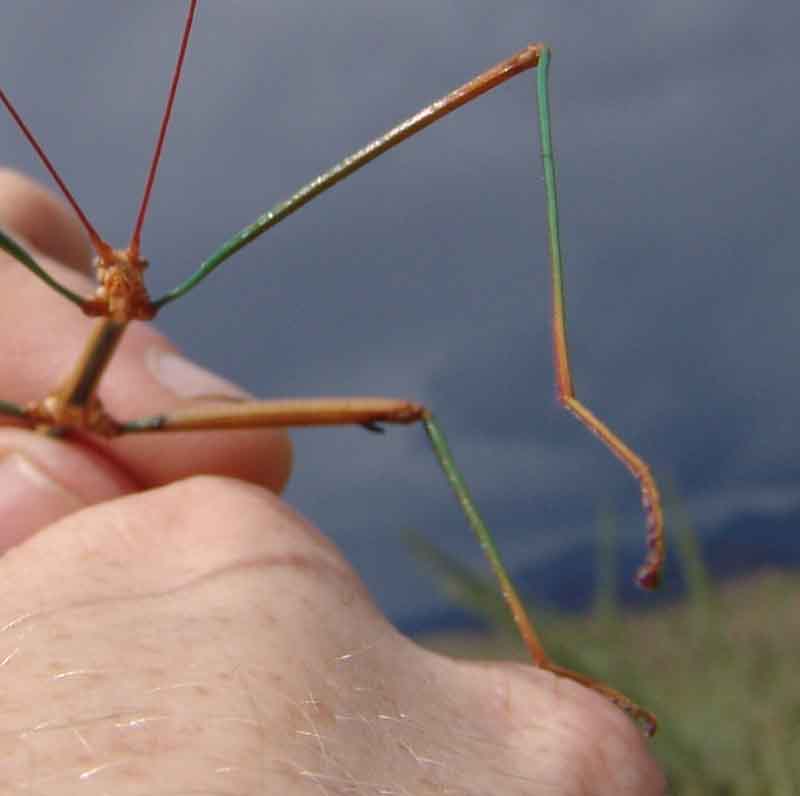 ...
...
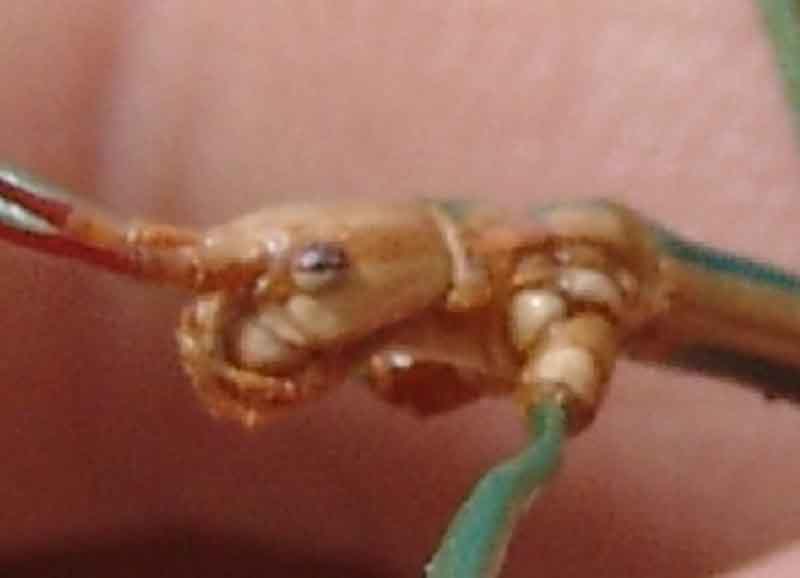
Below, close views of the head (on the left, upside-down). The eye is obvious in all three images. The mouth structures are specialized for eating leaves. Note also the structure of the left foreleg joint in the image at right. (click on each image to enlarge it)
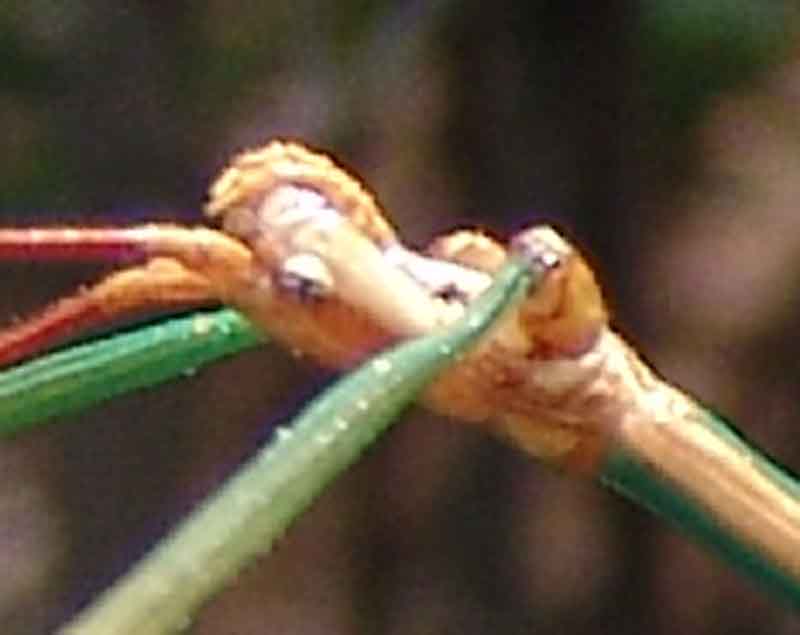 ..
..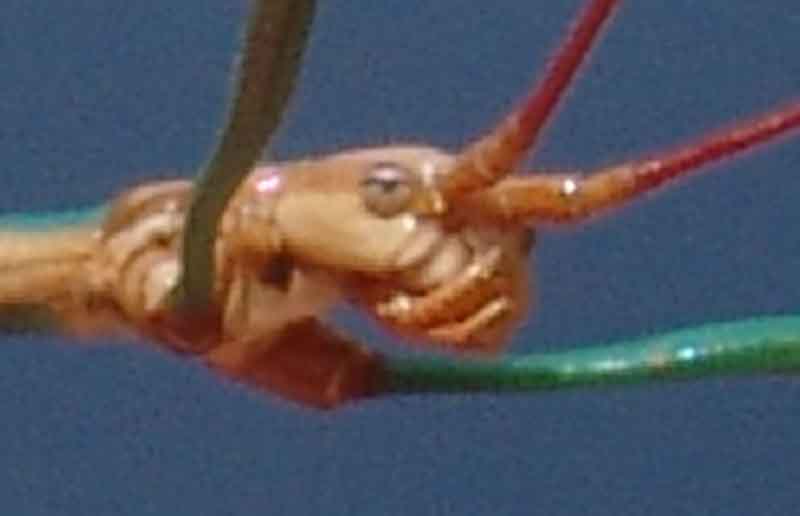 ..
..
Males are generally smaller than females, and more gracile. Females in some species may reproduce by parthenogenesis. Their eggs are large, often seed-like, and many species drop their eggs singly on the ground, where eventually the nymphs hatch and crawl back up into the plants (they look and behave much like the adults, an example of "imperfect metamorphosis" in contrast to, e.g., butterflies or beetles).
Judging by the extant fossil record, the Phasmatids are not a particularly ancient family, since the oldest known fossils date to 49-44 million years ago. Since the living forms feed almost exclusively on the leaves of flowering plants (Angiosperms), it seems likely that the line evolved in response to the time when these plants became dominant during the late Cretaceous Era.
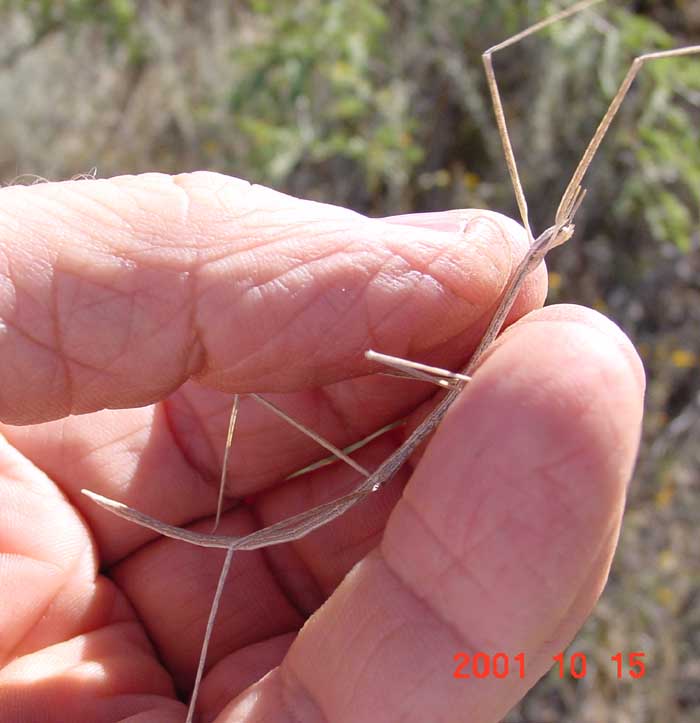
Phasmatids are worldwide in distribution, but are mainly found in tropical or subtropical climates. Periodically we see a lot of them on Saguaro Juniper lands -- late one summer, we found large numbers of what must have been astray-flying males drowned in two of our newly-installed cylindrical water tanks (these tanks are usually empty during the summer growing season, but had accumulated stands of water due to the rains) -- and we often seem to encounter them in September and October. We have not studied them, really, but will do so more as time permits. This one below we encountered in October of 2001. Its antennae are very short, and it is grayish in color (click on each image to enlarge it):
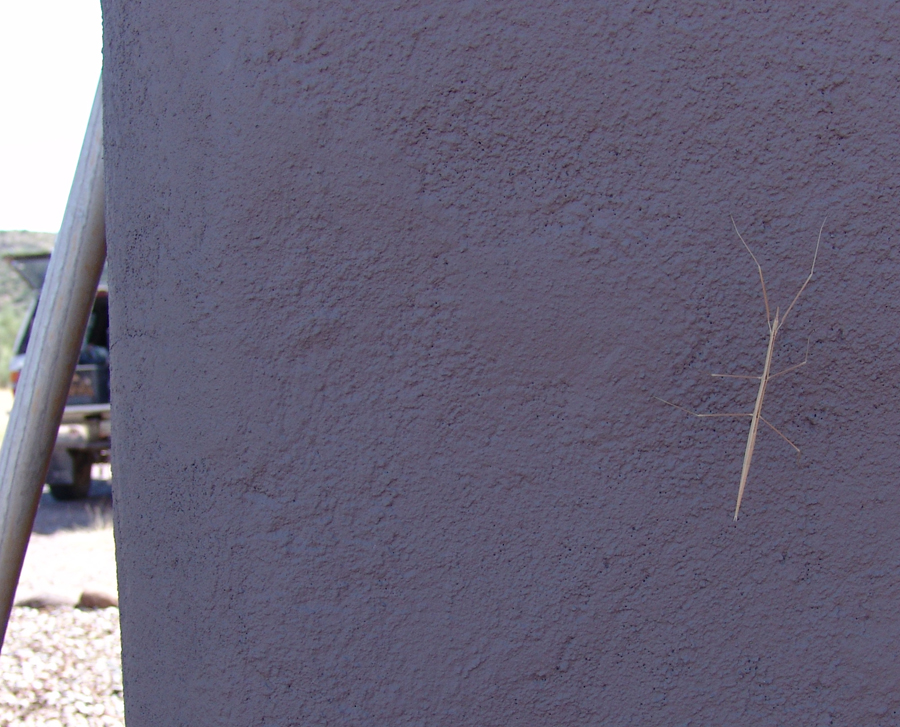
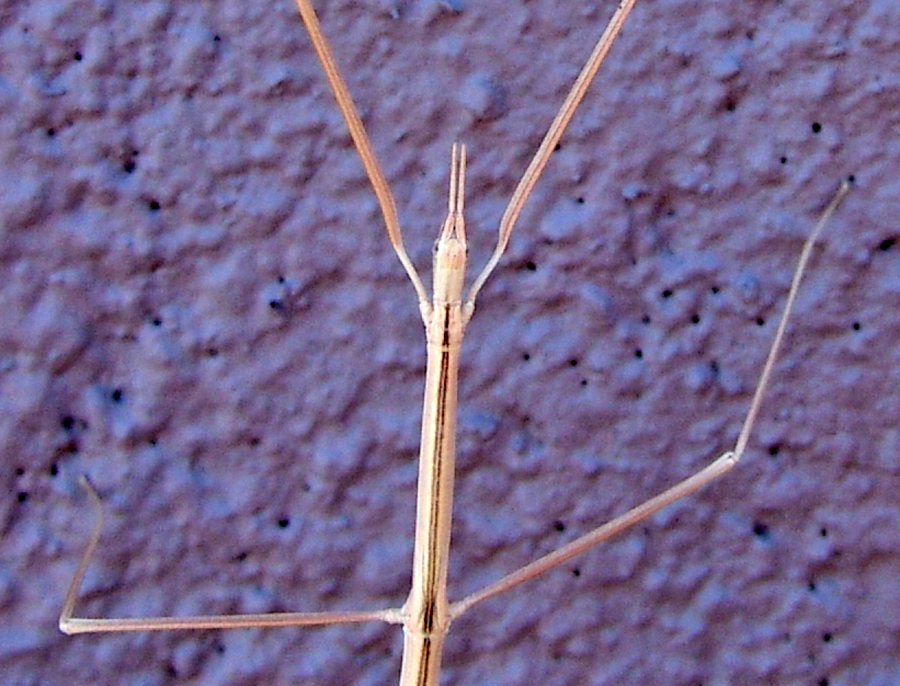
On October 9, 2010, we encountered this walker (which appears very similar to the one shown just above) on a house wall above lower Hot Springs Canyon.
 ..
.. ..
..